9 Personal Branding Mistakes Black Women Make in Business
The most common personal branding mistakes Black women make come down to one thing: shrinking. It looks like watering down your voice, hiding your story behind credentials, pricing like a pick me, and playing it safe with visuals and opinions. Each one feels like professionalism...meanwhile, you're missing out on clients, speaking gigs, and money.
I know because I made most of them for years.
My Confession First
When I ran my resume business, my whole brand was credentials. Forbes features, award nominations, certifications, all lined up front like a wall. The actual story, the Detroit raised island girl who quit her first job at 14 because she couldn't stand working for somebody else, was nowhere in sight. I thought the awards would do the talking.
And the visuals matched. Muted purple. Tan. Safe fonts. A brand so beige I got bored looking at my own website.
Both mistakes came from the same place. I believed sounding professional meant sounding like a older white lady because they were the industry leaders I was emulating. It took me years to figure out that I was actually hiding behind those credentials.
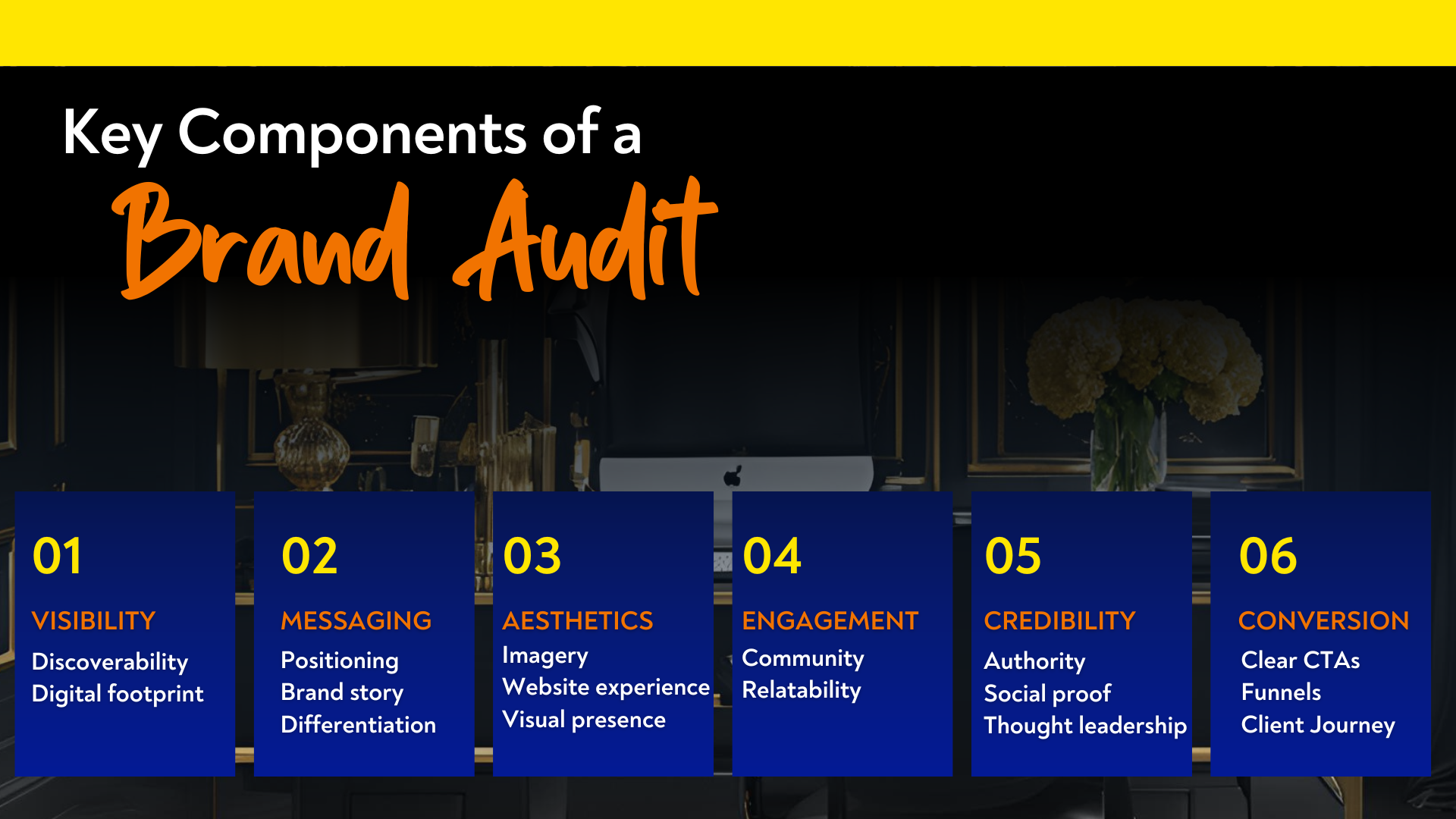
So this list comes from my own receipts and from auditing hundreds of brands for Black women just like you. I've mapped each mistake to the pillar it damages in my Surface Check™, the 6-part framework I use in every Digital Brand Audit: Visibility, Messaging, Aesthetics, Engagement, Credibility, and Conversion. That way you know exactly where your brand is leaking.
So, What are the Biggest Mistakes Black Women Make in their Personal Brands?
Mistake #1. Watering Yourself Down to Sound "Professional" (Messaging)
Your bio reads like a corporate press release. Your posts are careful, polite, and forgettable.
We do this because we were taught professionalism has one look and one sound, and it isn't ours. Attorney Leah Goodridge laid this out in her essay Professionalism as a Racial Construct. She outlines how the standard was built on whiteness, and it gets applied to us far more harshly than anybody else. We leave the flavor out.
It's unfortunate because whole time, our authenticity is the thing that people (including clients) are drawn to. It's the one thing that can truly set us apart, and we hide it for the sake of being 'professional'.
We learned how to code switch to survive corporate and carried it straight into businesses we own. Harvard Business Review documented the toll: it's exhausting, and it eats away at the exact authenticity that builds trust.
People don't connect with a representative. They connect with you. When the voice is flat, the comments are crickets, and crickets don't refer anybody.
Read your last post out loud. If you wouldn't say it that way in real life, that's the mask talking. Rewrite it the way you'd say it to your best friend. If you did it right, it won't sound like typical, professional post. It will sound honest. Post it and detach yourself from the outcome.
Mistake #2. Leading With Credentials Instead of Your Story (Messaging)
"MBA. Certified. 15 years of experience. As featured in." Sound familiar? That's the intro to every bio you've ever written, and it was mine for years.
Credentials feel like armor, don't they? When you know you'll be doubted the second you open your mouth, you lead with proof you belong in the room. I get it. I did it.
But credentials only tell people you're qualified. They don't tell people why they should pick you over the other qualified woman with the same letters after her name. Your story does that. It's the one asset nobody can copy, and most of us keep the best parts of our story locked away.
Start your bio and your about page with the moment that made you do this work. The epiphany you had that made you realize, this was what you needed to do next. If you need help, I broke down exactly how to structure that story here.
Mistake #3. Talking to Everybody (Messaging)
"I help people reach their full potential." Your ideal client could be anyone from a college student to a CEO, and that's the problem.
Narrowing feels like turning money away. And after years of being told we're too much, choosing one specific person can feel like volunteering to be rejected by everybody else.
A message for everyone lands with no one. Your dream client scrolls right past because nothing said "this is for you."
Call her out. Get clear on her goals, deep desires, challenges, fears, and beliefs around the work you do and craft your message around that. If your brand statement doesn't make one specific woman think "she's talking about me," rewrite it.
Mistake #4. Posting With No Point of View (Engagement)
Tips. Quotes. Reposts. Content that agrees with everybody and challenges nobody.
We've all watched what happens to Black women with opinions. So the hot take stays in the drafts folder and the safe version goes up.
But a brand with no perspective has no pull. People can't follow a stance you never took, and they definitely can't remember you for one.
Pick one thing in your industry you disagree with. Say it, then say why. Trust me, that single post will outperform a month of tips.
Mistake #5. Shining Bright in Person, Invisible Online (Visibility)
Referrals keep you busy. Everyone who meets you hires you. Google you, and there's almost nothing there.
We were raised to let the work speak. Self-promotion felt like bragging, and Forbes has covered how self-promotion clashes with the norms women are raised with. So we stayed excellent and quiet.
The cost is every client who never met you. Referrals only reach as far as your circle. Meanwhile strangers with real budgets are searching for exactly what you do and finding somebody else.
Google your own name today. Whatever comes up is your brand to a stranger. And to help you out, here's how to make sure that stranger becomes a client.
Mistake #6. The Muted Colors, Stock Photos, and Arms-Folded Blazer (Aesthetics)
Navy, gray, beige. A headshot against a white wall with your arms crossed. Visuals that could belong to any consultant in America. Lawd...I was cute...but so safe, just boring.

This one comes from the same place as mistake #1. We think safe visuals signal seriousness. I chose muted purple and tan for years because bright felt like too much, and I got bored looking at my own website.
People decide in seconds whether you look like someone who knows what she's doing. Generic visuals say "one of many." And if you love bright colors and sequins in real life, a beige brand sets up a catfish moment on every single call.
Your brand should look like you on your best day, not like a bank commercial. As a Black woman in business, here's what your website actually needs.
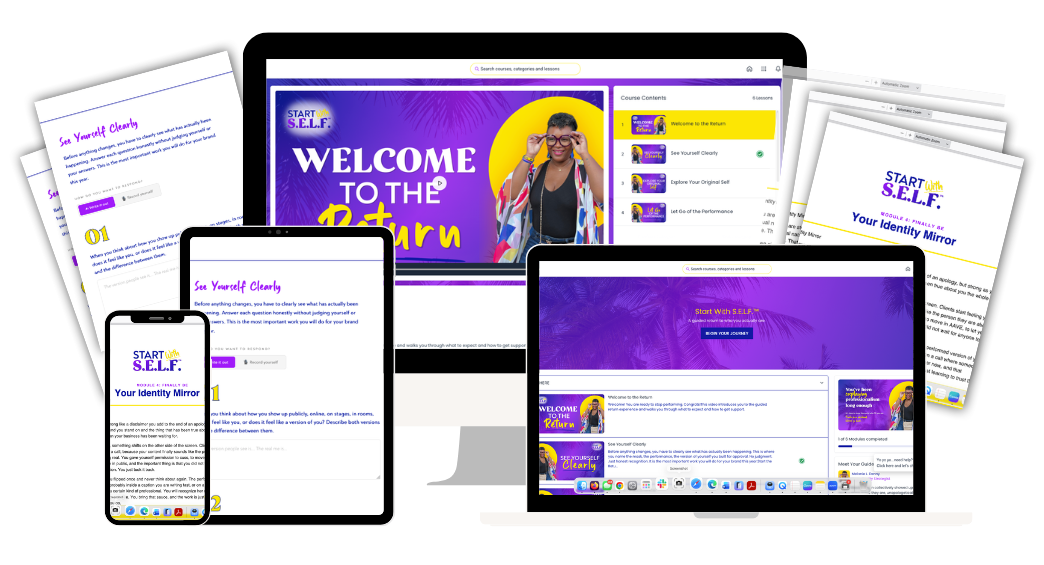
You’ve been cosplaying professionalism long enough. If you need to get rooted in who you are, Start With SELF is a 6-module guided return back to who you are. Finish in a weekend…never go back.
Mistake #7. Sitting on Your Receipts (Credibility)
Testimonials in your inbox. Client wins in your camera roll. Results you've never posted because it felt like bragging.
Humility got drilled into us as a virtue. And somewhere along the way we absorbed the idea that our wins don't count the way other people's do, so why make noise about them.
Meanwhile Black women already get held to a higher standard before anybody extends trust. Every receipt you hide is proof a stranger needed.
Post one client result this week, with real numbers and permission. Your client stories are your strongest marketing asset, and right now they're collecting dust.
Mistake #8. Pricing Like You're Lucky to Be Chosen (Conversion)
You quote a number and drop it the second someone flinches. You over-explain your rates. Your prices haven't moved in years.
A lot of us didn't grow up around four-figure budgets for personal development. We were conditioned not to ask for much. And deep down, plenty of us don't feel deserving of the premium, so we don't charge it.
But your price is a brand signal. When you charge low, the market believes you, and you're leaving real money on the table every month.
Do the math on your revenue goal versus your capacity. Then count your receipts and let them raise the number. I walk through the full pricing method here.
Mistake #9. No Clear Next Step (Conversion)
Someone finds you, likes you, trusts you, and then has no idea how to hire you. No booking link. No obvious offer. Just a vibe.
Asking for the sale feels pushy, and most of us would rather be helpful than salesy.
So the client who was ready bookmarks you, means to come back, and never does. That's a sale you already made and then let walk out the door.
One clear call to action on every profile, page, and post. Keep the door wide open for people to pay you.
Which Personal Branding Mistake Are You Making Right Now?
If you counted 3 or more, you may need to take another look at how you're showing up on this world wide web.
Need help figuring it out? Book a Digital Brand Audit.
We go through your website, LinkedIn, social media, and Google presence using the same 6 Surface Check™ pillars above, and I show you which mistakes you're currently making in your personal brand today and exactly how to fix them. It's only $97.
Book Your Digital Brand Audit → mellynated.com/audit
Frequently Asked Questions
What is the biggest personal branding mistake Black women make?
Watering down their voice to sound "professional." It causes most of the other mistakes on this list, because once you decide your real self is too much, you soften your story, your opinions, your visuals, and your prices to match.
Why does personal branding feel harder for Black women?
Because the standard advice assumes a level playing field. As BlackHer points out, our reputations are shaped by stereotypes before we say a word, and most branding advice ignores that entirely. It also asks us to self-promote after a lifetime of being told to stay humble.
How do I know which mistakes I'm making?
Google your name and read what comes up like a stranger would. Then check it against the 6 Surface Check™ pillars: can they find you, does your message sound like you, do your visuals match your caliber, is anyone engaging, is your proof visible, and is there a clear next step.
What is the Surface Check™?
It's the six-pillar framework we use to audit personal brands: Visibility, Messaging, Aesthetics, Engagement, Credibility, and Conversion. The name comes from my belief that surface won't suffice, meaning a brand can look polished and still fail at every one of these.